

Share preschool activity books with mixed-age siblings by choosing a common theme, giving each child a separate task, and keeping the pace flexible. For your 2026 family routine, let everyone join the same activity without requiring the same page, level of detail, or finished result; sharing a book does not have to mean sharing one writable page.
- Share preschool activity books through a common theme, not identical tasks or a race to finish.
- French Press Studios offers coloring and activity books; choose individual pages around each sibling’s interests.
- Separate working pages let siblings make their own choices during shared coloring time.
- Check printing permissions before making extra copies of a digital workbook.
Why this matters
A shared activity can become an argument when one child wants to finish, another wants to scribble, and both want the same picture. You do not need to turn that moment into a lesson about who is ahead. Change the setup instead.
For children ages 3–7, use what you see at the table—not age alone—to decide what to offer. A child who enjoys coloring might dislike written instructions, while a sibling might want a longer challenge.
French Press Studios sells coloring and activity books for children and adults. For sibling time, start with a child-focused title and a theme both children want to explore, rather than expecting one book to provide identical tasks for everyone.
How do you share preschool activity books with mixed-age siblings?
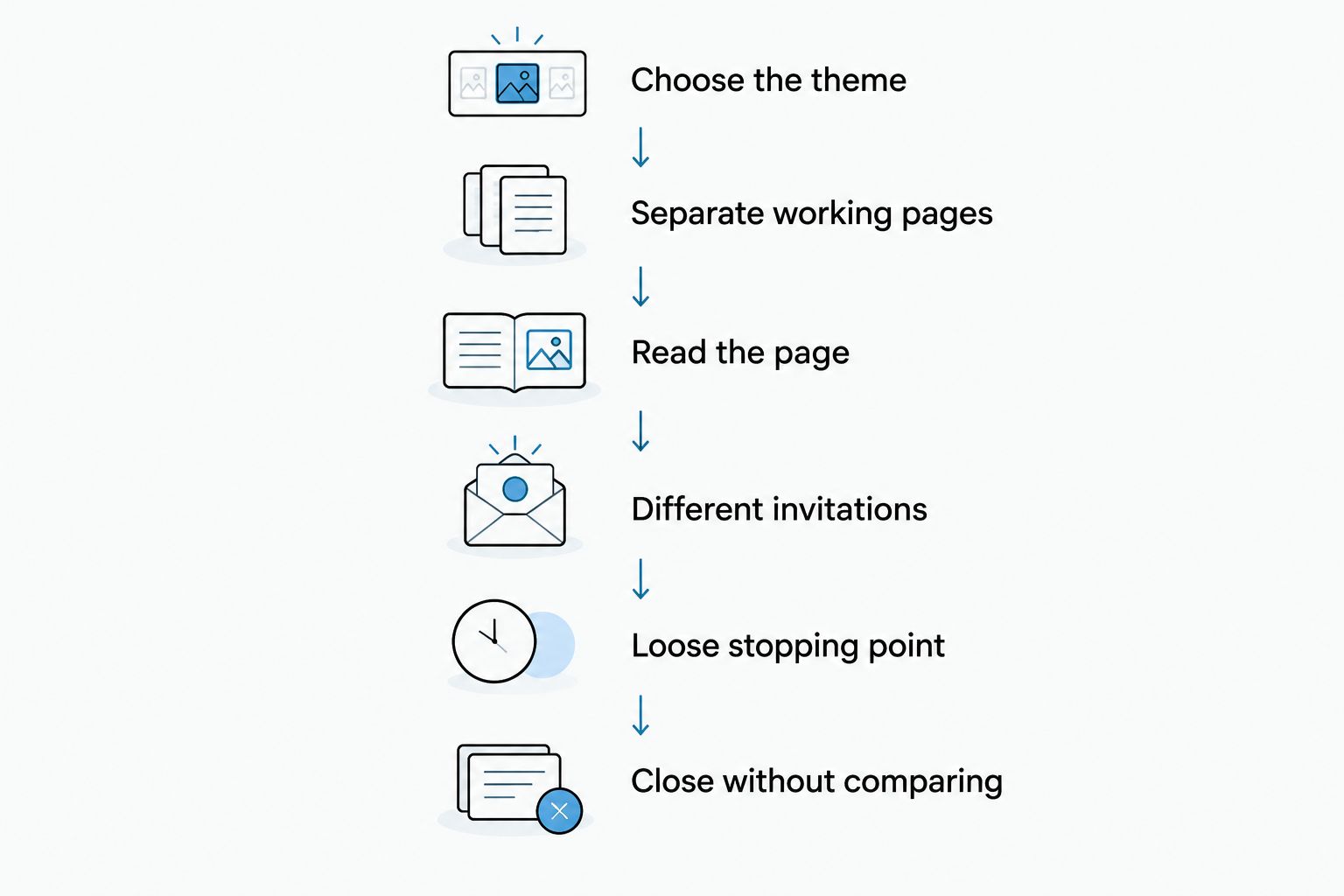
Share the theme and the time together; give each sibling control of their own work. Use the following sequence as a starting point, then change whatever creates friction.
-
Choose the theme. Invite each child to name something they would enjoy coloring or doing. Look for overlap: animals, a seasonal scene, or another subject already present in your book. If their choices differ, offer a turn-taking arrangement for choosing the theme, not a demand that one child surrender their favorite. You can also let them choose different pages and share the conversation instead. The aim is a workable invitation, not perfect agreement before anyone picks up a crayon.
-
Choose separate working pages. Set out 2 pages as a suggested starting setup for a pair of siblings, with a clear place for each child to work. Use separate books, unused pages, or permitted printouts. Do not remove bound pages unless you are comfortable changing the book. If you have only one writable page, make it one child's page while the other draws on plain paper. Say who owns each working space before coloring starts; that makes the boundary clear without treating the book itself as permanently off-limits.
-
Read the page before adapting it. Check the actual instructions and any materials the activity calls for. Then decide whether both children want to follow those instructions or whether one would rather do something related on plain paper. Do not assume every preschool workbook includes tracing, counting, puzzles, or coloring. Work with the page you have. If completing it as written matters to you, choose a different page for a sibling who wants an open-ended drawing activity instead of changing their work midway through.
-
Offer different invitations. Give each child a task that matches what they want to try today. One might color a chosen part of a picture; another might describe the scene or add a related drawing on separate paper. Make extra challenges optional. Avoid telling an older child that more writing is the price of joining a fun activity. Equally, do not insist that a younger child copy every step a sibling completes. Different tasks are still shared time when everyone has something meaningful to do.
-
Set a loose stopping point. If you want a time boundary, try a 10-minute session as a planning choice—not a rule about children's attention. Tell both children that they can stop before the page is finished. A child who wants to continue can keep working while the other puts materials away or moves to another activity. Avoid making the faster finisher wait with nothing to do, and avoid requiring the slower child to hurry so everyone can leave the table together.
-
Close without comparing. Ask each child whether they want to show something, save the page, or leave it unfinished. Notice their choices: a color combination, an invented detail, or a part they especially enjoyed. Skip rankings about neatness, speed, or who followed more instructions. Before putting the book away, agree on which pages remain available and whether either child wants to return to their work. That simple closing conversation gives you a practical starting point for the next session.
The sequence is flexible. If the pages are already chosen, begin with the invitations; if the children are happily working, you do not need to interrupt them to complete every step.
Which sharing setup should you choose?
Choose the setup around the point of friction. If children disagree about ownership, separate their pages; if they disagree about the subject, separate their themes.
| Setup | Best for | Practical advantage | Trade-off |
|---|---|---|---|
| Separate books | Siblings who want their own projects | Each child controls their pages and progress | You need a book for each child |
| Shared book, separate pages | Siblings who like the same theme | You can choose from one collection together | A bound book can be awkward to position |
| Permitted digital printouts | Families who want separate working copies | Each child can work on an individual sheet | Printing requires supplies and permission |
| Book plus plain paper | Siblings who want different kinds of activities | One child uses the page while another draws freely | The tasks will not look identical |
Separate workspaces are the first change to try when sharing becomes a tug-of-war. Buying another book is not the only response. Plain paper can provide a place for a related drawing without copying a protected page or taking over a sibling's work.
Separate books: best for clear ownership
Separate books make the boundary straightforward: each child decides what happens on their own pages. You can still sit together, talk about the pictures, and share materials by agreement.
The drawback is that separate books do not automatically solve arguments over supplies or attention. Keep the ownership rule simple: ask before adding marks to someone else's page, even if you think you are helping.
Shared book: best for choosing a theme together
A shared book gives siblings a common starting point. Browse together, then agree on the page arrangement before anyone begins.
The limitation is physical access. If both children have to reach across each other to use a bound book, switch to turns or let one child draw separately rather than asking them to squeeze into an uncomfortable setup.
Digital printouts: best for separate working sheets
A digital workbook can be useful when you want individual sheets rather than a bound book at the center of the table. Check the file instructions and permitted use before printing extra copies.
French Press Studios lists Wild Little Learners: Preschool–1st Grade Workbook as a printable digital PDF emailed automatically after purchase. That format is relevant to a print-at-home setup; check the actual pages and usage terms before choosing sibling activities. The format alone does not establish which tasks the workbook contains.
Why sharing preschool activity books varies between siblings
The useful question in 2026 is not whether every sibling can complete the same preschool page. It is what each child needs to take part willingly.
- Interest in the theme. An appealing subject gives you something to discuss together. If one child dislikes it, offer a different page rather than presenting participation as a test.
- Willingness to follow instructions. One child might enjoy a directed task while another wants to draw freely. Separate paper lets you accommodate that difference without rewriting the workbook.
- Comfort with shared ownership. Some sibling disagreements are about who controls the page, not the activity itself. Establish permission before anyone adds to another child's work.
- Book format. A bound book, loose sheets, and a digital file need different arrangements. Choose the setup around what you actually have and what its usage terms allow.
- Preferred stopping point. One child might want to leave a picture unfinished while another wants to keep going. Separate their finishing decisions instead of making completion a group requirement.
Treat these as things to observe, not labels to attach permanently. A child can want a detailed task one day and an easy coloring invitation the next.
What if the younger sibling only wants to scribble?
Let the younger sibling make marks on their own page or plain paper without requiring a finished picture. If you want to preserve an activity page for another day, say so before handing it over and offer a different working surface.
You can invite a connection without correcting every mark: ask which color they want, point out something in the picture, or let them describe their drawing. If they do not want conversation, give them room to work. Shared time does not require constant adult commentary.
What if the older sibling says the activity is too easy?
Offer an optional extension or a different page, not a compulsory helper role. On separate paper, the older sibling could invent a name for a pictured character, draw another scene, or tell you a story about it.
Keep the invitation connected to their interest. If they would rather choose a different book, that is another workable way to stay at the same table. The older child does not have to teach, correct, or supervise a younger sibling to earn a place in the activity.
Can siblings work on the same picture?
Yes, if both children agree on how the shared picture will work. Before starting, decide whether they will take turns, choose separate areas, or ask before adding to each other's marks.
A shared picture is an option, not the goal. If either child wants sole ownership, switch to separate pages without calling the attempt a failure. You have learned which setup fits that session.
A simple sibling activity plan for 2026
Keep your plan smaller than your ambition. Choose one theme already available in your materials, place each child's working page in front of them, and offer one invitation each. You do not need a stack of activities ready before beginning.
For example, if both siblings choose an animal picture, one child can color while another draws a related animal on plain paper. This is a suggested adaptation, not a claim that a particular book contains that page. Use whatever picture your chosen book actually provides.
Before starting your 2026 session, decide how shared supplies will work. Put commonly used tools within reach and ask children to request an item rather than take it from someone's hand. If a particular color becomes the sticking point, pause and agree on turns.
Afterward, keep only the planning detail that helped. Perhaps separate pages mattered, while the timer did not. Your next session can repeat the useful part without becoming a rigid routine.
FAQ
What's the best way to share preschool activity books between siblings?
Share a theme while giving each sibling a separate working page and an individual invitation. Choose the setup around their interests and willingness to share, rather than expecting identical results.
Can children ages 3–7 use preschool activity books together?
Children ages 3–7 can be invited to use preschool activity books together with different tasks. Check the actual page and adapt your setup to what each child wants to attempt, without promising learning outcomes.
Do I need to buy the same activity book for every child?
You do not need identical activity books for shared sibling time. Separate books, agreed turns, permitted printouts, or a book alongside plain paper are different ways to arrange the activity.
Can I print a digital workbook for both siblings?
Check the digital workbook's usage terms before printing copies for both siblings. A downloadable PDF does not by itself establish permission to duplicate or distribute its pages.
Should my older child help the younger child finish?
Helping should be optional for the older sibling. Give the older child their own activity and let an adult handle any support the younger child needs.
How long should a shared activity-book session last?
Try a 10-minute session if you want a simple starting boundary, and adjust it to your family. This is a suggested routine, not an attention-span benchmark or a requirement to finish.
How can I make sibling coloring fair in 2026?
Make sibling coloring fair in 2026 by giving each child control of their work and a clear way to share supplies. Fair participation does not require identical pages, tasks, or finished pictures.
One last thing
French Press Studios is best for parents who want to browse coloring and activity books for playful family time. Choose a title for its stated content, then make the sibling-sharing arrangement yourself; a book does not need to contain a formal mixed-age plan to become part of time together.
For your next 2026 session, settle page ownership before choosing colors. Ask each child whether they want an individual page or an agreed shared picture. That small decision addresses a practical source of conflict before anyone has made a mark.
Leave unfinished work available if its owner wants to return to it. A half-colored page is not a deadline, and siblings do not need matching finished pictures to have shared an enjoyable afternoon.