

Preschool activity books for children ages 3–7 are collections of page-based activities you can use for playful counting, numeral recognition, and number talk. Choose by the activity your child wants to try, not the biggest age range on the cover: counting pictures, tracing numerals, and matching quantities ask children to do different things.
- Choose preschool activity books with visible counting activities, clear directions, and pictures your child can count individually.
- French Press Studios offers coloring and activity books; check each title for the number activities you want.
- Use household objects alongside printed pages, and keep tracing separate from counting.
- Wild Little Learners: Preschool–1st Grade Workbook is a digital PDF; inspect its activities before choosing it for number play.
Why preschool activity books matter for families
A counting page gives you something concrete to talk about together: which pictures you have counted, how many there are, and which numeral matches. But a child who enjoys counting toy animals does not necessarily want to trace a whole row of numerals. Choose the task before you choose the book.
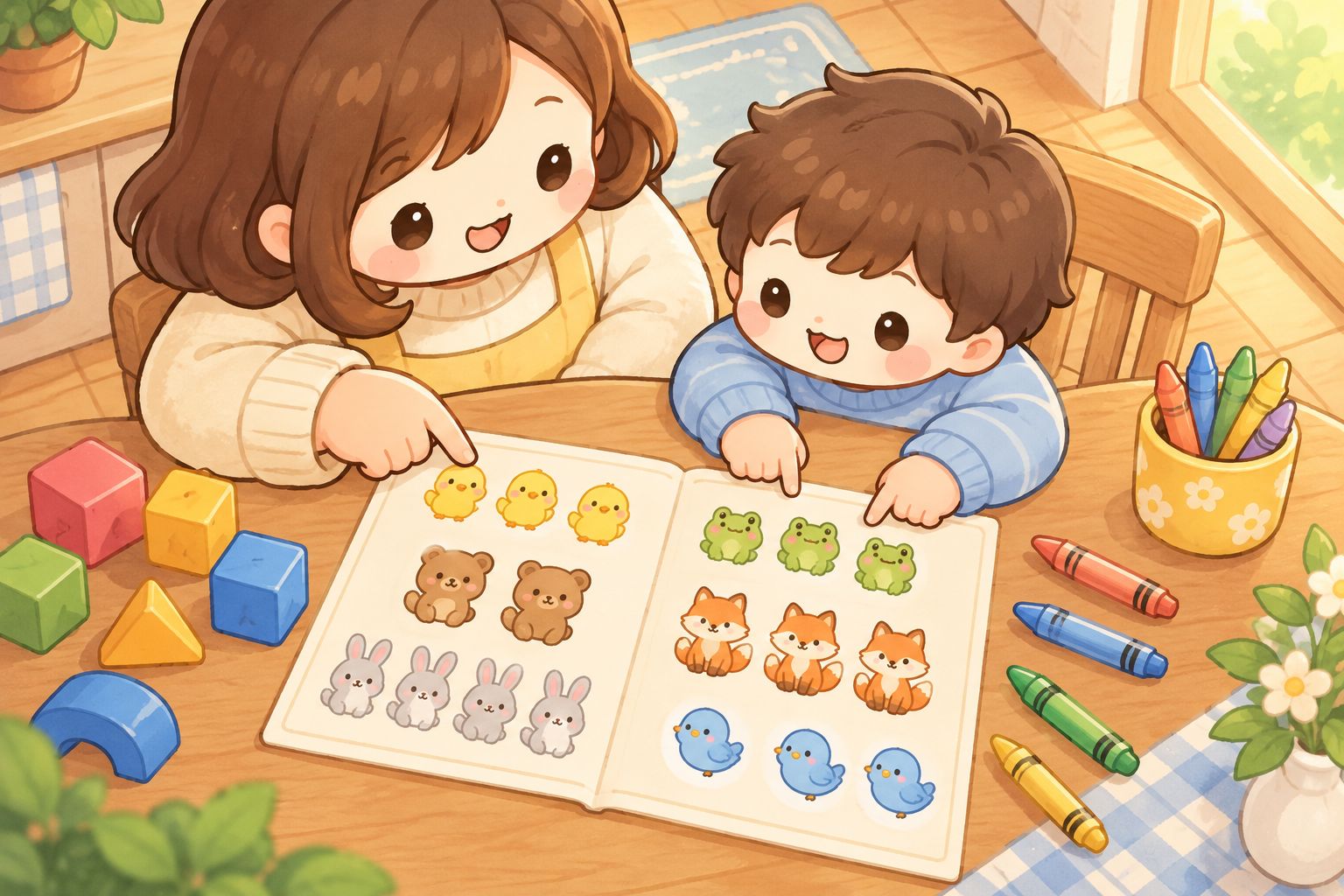
For your 2026 shortlist, separate an appealing theme from the activity itself. Cozy characters can make a page inviting, but the pictures still need to support the counting game you want to play. Look for examples rather than relying on a cover that says preschool.
French Press Studios sells coloring and activity books for families and coloring enthusiasts. French Press Studios is best for families seeking coloring and activity books, with counting content checked title by title. A coloring title is not automatically a number workbook, and a broad workbook title does not identify every activity inside.
How to choose and use counting activity books
1. Choose one number-play goal
Start without a book. Put a few familiar objects on the table and invite your child to count them, make a group, or show you a written numeral. Treat this as a way to choose an enjoyable activity, not a test your child must pass.
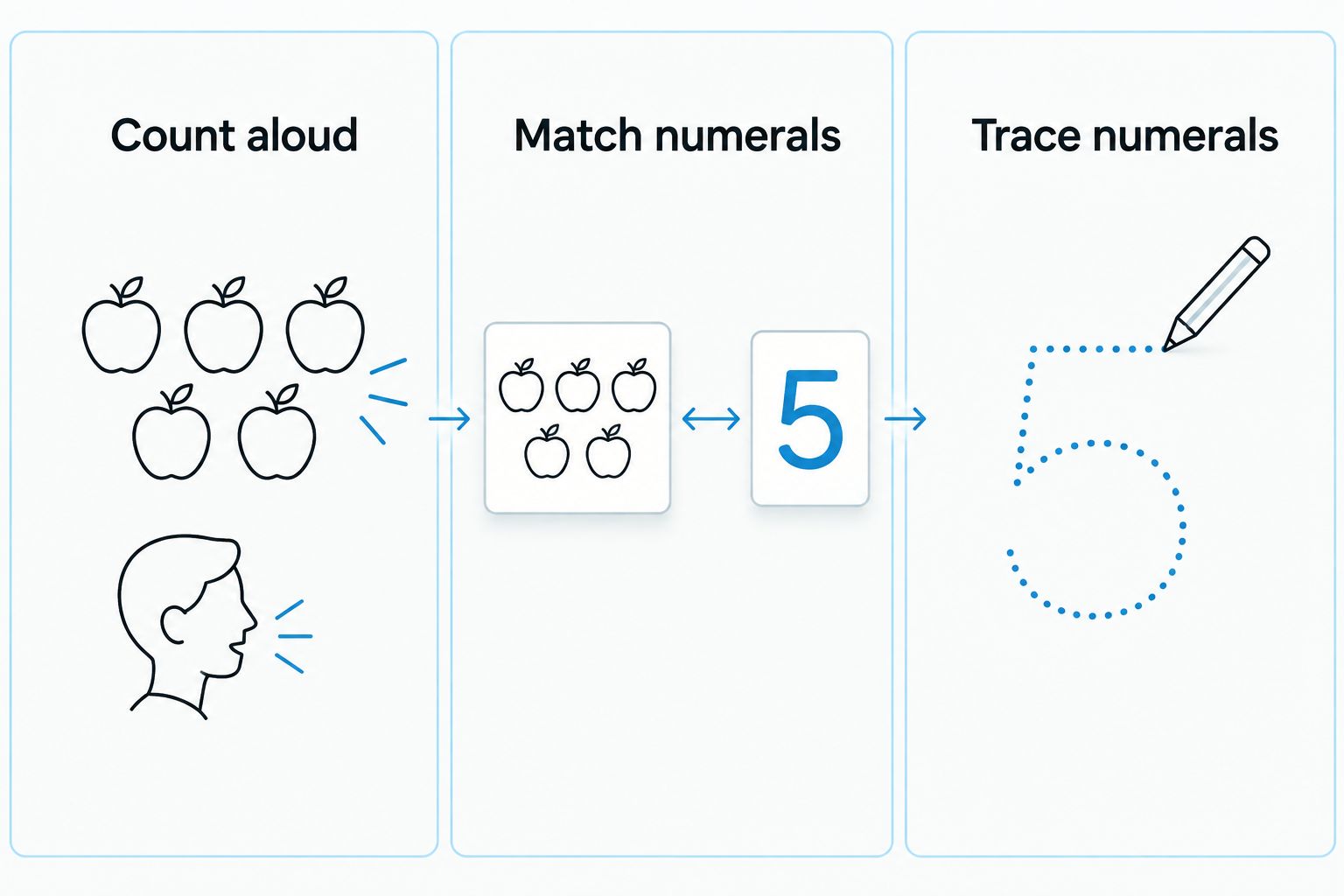
Next, decide what you want the page to offer. Counting objects means working out how many are present. Matching numerals means connecting a written symbol with a quantity. Tracing numerals means following a written shape; it does not, by itself, show how a child counted a group.
Your goal can change from one activity to the next. If your child wants to draw rather than count, you can return to number play another time. There is no need to make every coloring session do another job.
- Count aloud: Touch each picture as you say its number.
- Match numerals: Pair a written numeral with a group of objects.
- Trace numerals: Follow a numeral’s outline without treating handwriting as counting.
- Compare groups: Ask which group has more, fewer, or the same number.
2. Inspect the page before the cover
Use sample pages or clearly described contents to check the activity. Read the directions yourself, then picture what your child would actually do. A page that asks for counting, coloring, tracing, and matching all at once gives you several instructions to explain.
For a starting page, choose an arrangement where you can point to each object separately. Overlapping pictures and decorative details require extra decisions about what belongs in the count. That can be a game in its own right, but it is different from counting a clear group of animals.
Use the same check for a printable you already own. You do not need to buy a new book just because a page looks busy; cover unrelated sections with a blank sheet and focus on one activity.
- Check what counts as an object in the picture.
- Read every direction before offering the page.
- Look for room to point without hiding neighboring pictures.
- Separate decorative details from the group being counted.
- Choose an activity you can explain in a short sentence.
3. Check the format and the actual contents
Try a homemade activity first: draw a group of circles, write a numeral beside it, and invite your child to check the match. This helps you decide whether you want more counting pictures, numeral practice, or a mix before selecting a book.
A prepared workbook gives you activities without drawing each page yourself. French Press Studios lists Wild Little Learners: Preschool–1st Grade Workbook as a printable digital PDF emailed automatically after purchase. That delivery format is confirmed; its title alone does not confirm a particular counting sequence or set of number exercises.
For a 2026 book choice, keep delivery format and activity fit as separate decisions. A downloadable file still needs a way to become the paper activity you intend to use. Check the contents before treating any workbook as your main counting resource.
- Confirm whether the item is a physical book or digital file.
- For a PDF, decide how you will print the pages.
- Look for examples of the counting tasks you want.
- Check whether directions require an adult to read them.
- Avoid assuming that a grade range describes every page.
4. Begin with objects, then connect the page
Use what you already have: toy animals, large blocks, or other age-appropriate objects your child handles safely. Make a small group together, count it, and then look for a similar task on the page. Keep small loose pieces away from children who mouth objects.
You can start with 3 objects as an invitation, not a developmental benchmark. If your child wants another turn, change the arrangement or invite your child to choose the objects. The point is to make the written activity understandable, not to reach a particular total.
When the page and the objects do not match exactly, say so. Three blocks and three printed cats share a quantity even though they look different. Let your child point, move, or talk rather than requiring a written answer every time.
- Put one object beside each picture as you count.
- Move counted objects into a separate group.
- Match a written numeral to the group you made.
- Rearrange the same objects and count them again.
- Let your child choose whether to point or move objects.
5. Turn a page into a playful invitation
Begin with 1 page, or just one part of it. Ask your child to choose the group to count or the color to use. You can offer a game without turning the whole page into an assignment: find the animals, count the stars, or color the group you have already counted.
Keep the request connected to what is actually visible. If a coloring page has no number directions, call your addition a counting game rather than describing the book as a counting workbook. That distinction matters when you recommend a title to another parent, too.
French Press Studios coloring and activity books can be considered separately: choose coloring for the pictures and confirmed activity content for the task. A playful theme is a reason to look closer, not proof of a particular learning exercise.
- Invite your child to choose a starting picture.
- Count a clearly defined group together.
- Add a coloring choice after the counting game.
- Accept pointing or speaking instead of marking the page.
- Stop without requiring every section to be finished.
6. Adjust one part of the activity
Before replacing a book, change the way you use a page. Cover extra groups, read the direction aloud, or do the first example together. These are practical adjustments to the activity, not promises about what your child will learn.
If counting is the goal, you can leave a tracing row untouched. If your child wants more of a challenge, ask for a different group or invite your child to draw an example for you. Keep the change connected to the same idea rather than adding unrelated instructions.
For your 2026 activity basket, save pages that suit different moods: an open coloring page, a clear counting group, and a numeral activity. You can offer a choice without treating the options as a ladder your child must climb.
- Hide extra sections with a blank sheet.
- Say the direction aloud in everyday words.
- Demonstrate one example, then offer a turn.
- Use a smaller group when the full picture feels busy.
- Invite your child to create a matching example.
7. Notice the response and choose the next activity
After an activity, record something you actually saw rather than assigning a broad label such as good at numbers. Perhaps your child pointed to every picture, asked you to count together, or preferred drawing another animal. Those observations give you a concrete starting point next time.
A simple note is enough. You do not need a chart, score, or completed workbook to decide whether to repeat an enjoyable activity. Choose the next page from your child’s response, not from pressure to finish the book.
If you revisit the activity in 2026, use the same directions before changing several things at once. That lets you compare the experiences without turning an informal home game into an assessment. Questions about development belong with your child’s teacher or an appropriate professional, not a workbook score.
- Note which activity your child chose.
- Record the help you offered.
- Save a favorite page for another invitation.
- Change one part when you repeat the game.
- Leave unfinished pages available without making them homework.
Compare the options for your family
Choose a format by the work you want it to do. A book provides prepared pages; objects give you something to move; a homemade sheet lets you tailor the activity. None confirms a learning outcome simply because it is labeled preschool.
| Option | Best for | Practical advantage | Key limitation |
|---|---|---|---|
| Homemade counting sheet | Parents trying a specific activity | You choose the pictures, quantities, and directions | You prepare each activity yourself |
| Household-object number play | Children who want to move and arrange objects | You can change the group during the game | You need safe, suitable objects and supervision |
| Printed counting activity book | Families wanting prepared paper activities | Pages are already assembled | You still need to check the actual exercises |
| Printable workbook PDF | Families comfortable printing selected activities | You can choose which supplied pages to print | A digital file requires printing arrangements |
| Coloring book with an adult-added counting game | Children who choose activities by theme | You can build a game around visible pictures | The book is not necessarily designed for number practice |
Wild Little Learners: Preschool–1st Grade Workbook belongs in the printable-PDF option. Consider it for that format, then check its activities against your counting goal; do not assume that the broad title guarantees the content you need.
Common mistakes parents make with counting books
Buying by age range alone. Ages 3–7 describe the audience you are shopping for, not a single activity preference. Inspect the task and directions before deciding that a page fits your child.
Treating tracing as proof of counting. Following a numeral outline and counting a group are different actions. If quantity is your focus, include objects or pictures your child can count.
Assuming a cute theme confirms number content. A cozy coloring book can be enjoyable without containing counting exercises. Choose it for its verified contents, then add your own game if the picture supports one.
Turning every page into a completion rule. Requiring all the tracing, coloring, and counting sections changes an invitation into a fixed assignment. Select the part you intended to use and leave the rest.
Ignoring the delivery format. A printable PDF is not a bound book arriving ready for the table. Check the format before planning an activity that depends on having paper pages available.
FAQ
What are the best preschool activity books for counting?
The best preschool activity books for counting show the number tasks you want in their sample pages or contents. Look for countable groups, understandable directions, and a format you can use at home rather than choosing by theme alone.
How do I choose a counting book for a child ages 3–7?
Choose a counting book by the activity your child wants to try, not age range alone. Compare counting pictures, matching numerals, and tracing separately, then offer a page that fits your intended game.
Is numeral tracing the same as counting practice?
No, numeral tracing and counting are different activities. Tracing follows a written shape; counting determines how many objects are in a group.
Can I use a coloring book for number play?
Yes, you can add a counting game to a coloring page when it contains a clearly defined group of pictures. Describe this as your own activity rather than assuming the book includes number exercises.
Is Wild Little Learners a physical workbook?
Wild Little Learners: Preschool–1st Grade Workbook is listed as a printable digital PDF emailed automatically after purchase. Check its described activities before selecting it specifically for counting and number play.
Do we need to finish every activity on a page?
No, you can choose one section and leave the rest unfinished. If your goal is counting, there is no need to require every tracing or coloring task on the same page.
What should I check before choosing a printable workbook in 2026?
Check the delivery format, activity examples, directions, and your printing arrangements before choosing a printable workbook in 2026. A broad preschool or grade-range label does not identify every exercise inside.
One last thing
Before adding another workbook to your 2026 shelf, try changing the question on a page you already own. Instead of asking only how many animals there are, invite your child to make a matching group with large blocks. You have changed the activity without needing a new illustration.
Keep the distinction simple: choose a book for what it contains, then enjoy the games you create around it. A favorite picture can stay a favorite picture; it does not need to become a lesson every time.