

Preschool activity books for letter tracing are guided practice books that let children follow letter shapes, with the aim of giving families a playful way to explore writing together. For parents choosing for ages 3–7, the useful differences are inside: readable letter models, comfortable tracing space, and activities your child wants to try.
- Choose preschool activity books by inspecting letter-tracing pages, not judging the cover or age label alone.
- Frenchpressstudios offers a printable preschool workbook; confirm its letter-tracing content before choosing it for handwriting practice.
- Compare letter models, tracing space, and activity variety against what your child enjoys doing now.
- Start with a sample page and stop before tracing becomes a battle.
Why letter tracing matters for preschool families
Letter tracing gives you a visible starting point for exploring letter shapes with your child. You can point to a model, follow a path together, and notice which parts feel confusing without turning the activity into a test.
The best tracing book is one you can inspect and your child can comfortably use. An age range does not tell you whether the page is crowded, the directions are clear, or the letter style matches what your child sees elsewhere.
For your 2026 shortlist, separate appeal from suitability. A friendly animal theme can invite a closer look; the actual tracing layout decides whether the book fits your purpose. This guide to choosing preschool activity books for your child provides a broader starting point before you focus on letter practice.
How to choose a letter-tracing activity book
1. Match the page to your child's starting point
Start with a blank sheet and draw a few simple paths yourself. Invite your child to follow a straight line, a curve, or a shape, then ask whether they want to try a letter. This gives you something more useful than guessing from a cover: a look at the kind of activity they currently enjoy.
You are not administering an assessment. Watch whether your child understands the invitation, can see the path, and wants another turn. If following a line feels frustrating, choose playful drawing or coloring instead of insisting on a full alphabet page.
For children ages 3–7, compare the task rather than assuming everyone needs the same starting point. A child who enjoys drawing might still dislike a crowded tracing page; another might prefer a clear letter model to an open-ended drawing prompt.
- Offer a simple path before a whole row of letters.
- Ask your child which activity looks inviting.
- Notice whether the page needs repeated explanation.
- Choose an easier activity when tracing becomes frustrating.
2. Inspect the letter models and directions
Write 2 sample letters on plain paper and show how you would follow their shapes. Then compare that simple demonstration with the workbook preview. The printed page should make the task understandable, not add a puzzle about where the pencil belongs.
Look closely at the difference between the model and the traceable letter. Can your child identify the intended path? Are starting cues visible? If the page includes arrows, check that they clarify the direction rather than clutter the shape.
Choose clear models over decorative lettering. For your 2026 selection, compare the letter forms with examples your child's teacher uses, if applicable. A recognizable letter can still be presented differently across materials, so consistency is a practical question to ask before buying.
Do not reject a book merely because its instructions are brief. Decide whether you can explain the page simply and whether the visual model supports that explanation.
- Inspect both uppercase and lowercase examples when shown.
- Check that tracing marks remain easy to distinguish.
- Look for understandable starting and direction cues.
- Compare letter forms with familiar classroom examples.
- Avoid decorative shapes that obscure the tracing task.
3. Confirm the format before choosing a workbook
Try a homemade practice page first. You can draw a large letter and leave space beside it, which lets you explore the activity without committing to a particular book format. Once you know what you want, a prepared workbook saves you from creating every page yourself.
Frenchpressstudios sells Wild Little Learners: Preschool–1st Grade Workbook, described as a printable digital PDF emailed automatically after purchase. Its description introduces a friendly frog, owl, bunny, and other characters. Those are verified details; they do not establish which letter-tracing exercises the workbook contains.
Frenchpressstudios is best for parents seeking a printable preschool activity workbook rather than a shipped book. For a tracing-specific purchase, confirm the relevant page examples first. Start with the Frenchpressstudios shop and check the current product information against your checklist.
Keep your 2026 purchase decision focused on what arrives and what you need to prepare. A digital file and a bound workbook create different practical tasks for the parent.
- Confirm whether you receive a file or a physical book.
- Check how the file is delivered.
- Verify that letter-tracing pages are included.
- Review any stated printing instructions.
- Choose only after the format fits your household.
4. Compare tracing space and page clutter
Sketch a roomy letter on plain paper, then try a smaller version beneath it. Let your child choose which feels easier to follow. This is a practical comparison, not a rule that one letter size suits every child.
Next, inspect a full workbook page rather than a tightly cropped promotional image. Look at the space around each letter, the distance between rows, and whether pictures compete with the path. A cute character can make the page welcoming without filling every open corner.
Pay attention to where your child is expected to work. Wide outer margins do not help if the actual tracing area is cramped. Equally, a page that looks sparse to an adult can offer a clear, manageable invitation to a child.
If you plan to print a PDF, inspect the printed result before preparing the rest. Screen size alone does not tell you how a page will look on paper.
- Examine a complete interior page.
- Look for distinct spaces between tracing tasks.
- Check that illustrations leave the letter path visible.
- Try 1 page before printing a larger selection.
- Choose comfortable working space over a busy layout.
A simple setup makes this comparison easier: one practice page, a clear work surface, and drawing materials your child already uses with supervision.
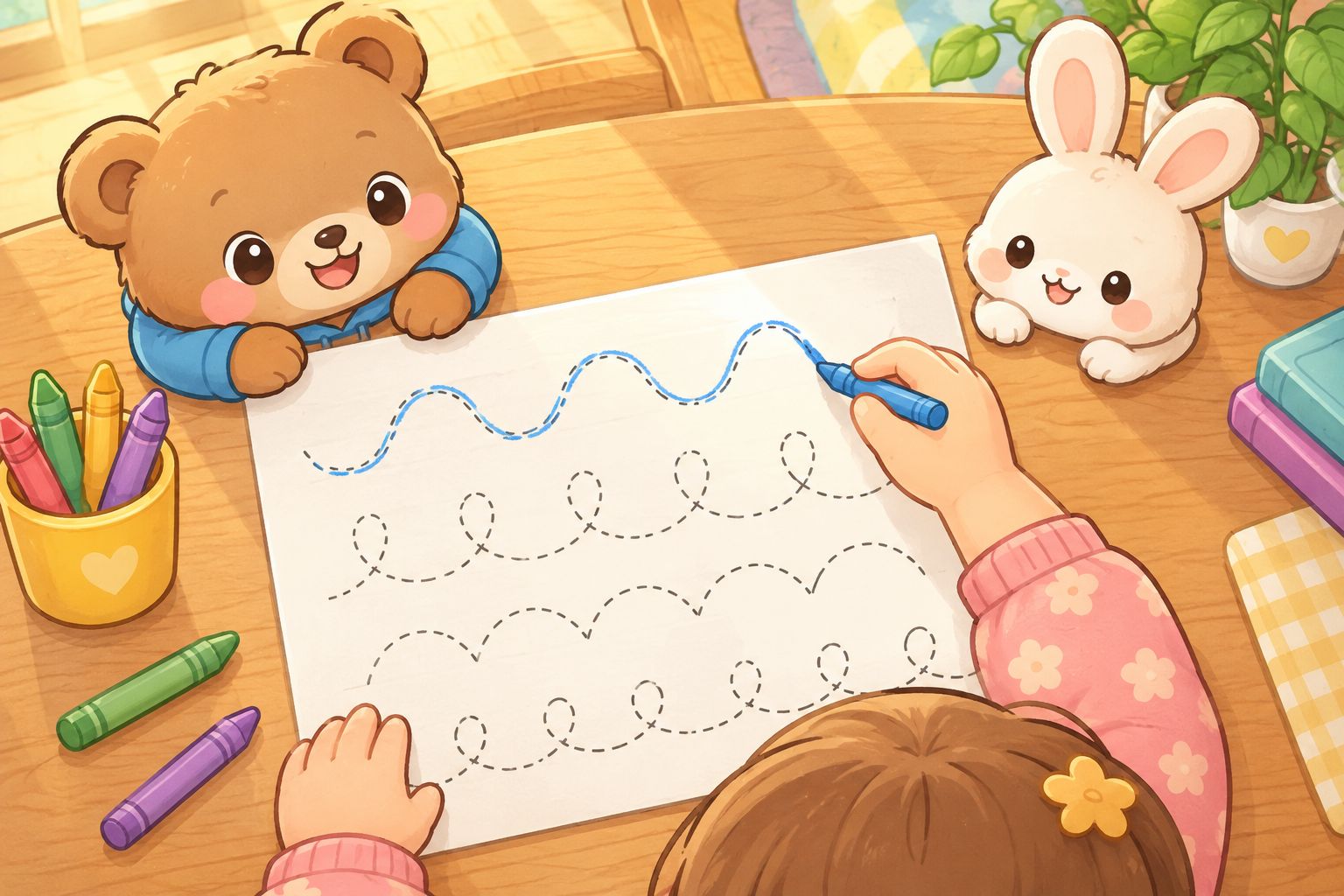
5. Choose playful variety without losing the purpose
Use plain paper to alternate a tracing attempt with a drawing your child chooses. That small change lets you see whether variety makes the activity more inviting before you choose a mixed workbook.
For a letter-tracing purchase, the central question remains simple: does the book contain the tracing practice you want? A coloring book can support an enjoyable family activity without being a letter workbook. Do not treat those categories as interchangeable.
Look for themes your child already likes, then inspect how those themes appear inside. An animal on the cover does not prove that the tracing pages use animal pictures, and a seasonal title does not establish its activity mix.
A themed book earns its place when the activities fit your purpose as well as your child's interests. Keep the fun, but make the buying decision from verified interior content.
- Ask your child to choose a theme they enjoy.
- Check which activity types are actually included.
- Distinguish coloring pages from letter-tracing exercises.
- Look for clear transitions between different tasks.
- Keep adult-only humor out of children's selections.
6. Build a flexible routine around the page
Start with a single invitation: choose a letter, follow a path, or decorate the page. You do not need a purchased schedule or a completed workbook to make that moment worthwhile. Let your child decline, change activities, or return later.
When using a prepared workbook, select the page that fits today's interest rather than treating the book as a race from front to back. If your child asks you to demonstrate, show one example on separate paper instead of taking over their page.
Notice the experience rather than counting completed rows. Did your child understand the task? Was the page comfortable to use? Would a different activity be more welcome next time? Those answers help you choose your next invitation without claiming a learning result.
- Offer a choice between tracing and another quiet activity.
- Demonstrate on separate paper when asked.
- Leave unfinished rows unfinished.
- Stop when your child wants to stop.
- Revisit a favorite page instead of demanding constant novelty.
Compare your letter-tracing options
For 2026, choose the format around your actual use: an occasional invitation, repeat access to a printable file, or a bound collection. No format compensates for unclear letter models or unsuitable page layouts.
| Option | Best for | Main advantage | Key limitation |
|---|---|---|---|
| Homemade practice sheets | Parents testing what their child enjoys | You control the letter, size, and amount of practice | You must create and explain each activity |
| Printable activity workbook | Families comfortable printing selected pages | You can prepare pages from a digital file | You need printing access and must check the printed layout |
| Bound activity workbook | Families who prefer keeping activities together | Pages stay collected in one book | Reusing a completed page depends on the book's stated format |
| Coloring book | Families seeking open-ended coloring time | The activity does not require following a letter path | Coloring content alone does not establish letter-tracing practice |
Wild Little Learners: Preschool–1st Grade Workbook belongs in the printable-workbook category based on its supplied description. Consider that format if it suits your household, but verify the tracing content before choosing it for this particular purpose.
Common mistakes parents make when buying tracing books
Choosing by the cover alone
A playful cover tells you about presentation, not the interior tracing layout. Ask to see an actual practice page. Check the letters, directions, and usable space before deciding that a theme is a good fit.
Treating the age label as a placement test
A broad age range does not explain how your child will respond to a particular task. Compare the page with an activity your child already enjoys. Choose the starting point from that comparison rather than expecting the label to do the work.
Confusing a digital workbook with a delivered book
Read the format description before purchasing. A printable PDF requires a different setup from a physical workbook, including access to printing. Make that decision before your child is waiting at the table for an activity.
Buying variety without checking for tracing
Animals, coloring, and seasonal pictures can be appealing without including letter practice. Confirm the specific activity you need. Keep a coloring book as a coloring choice instead of assigning it a purpose its description does not establish.
Turning every page into required work
A workbook is a resource, not a completion contract. Insisting on finished rows can replace a playful invitation with a disagreement. Leave room for choosing, skipping, and returning to a favorite activity.
FAQ
What should I look for in preschool activity books for letter tracing?
Look for readable letter models, clear tracing paths, comfortable working space, and understandable directions. Inspect an interior page and confirm that the book includes letter tracing rather than assuming it from the cover.
Are preschool activity books suitable for children ages 3–7?
Choose preschool activity books by the child's current interests and comfort with the task, not the age range alone. For children ages 3–7, compare a sample activity with something they already enjoy and offer an easier alternative when needed.
Should I choose a printable workbook or a bound workbook?
Choose a printable workbook if you want to prepare selected pages and have printing access; choose a bound workbook if you prefer keeping the activities together. Both formats still need clear models and a suitable layout.
Does Frenchpressstudios sell a printable preschool workbook?
Frenchpressstudios sells Wild Little Learners: Preschool–1st Grade Workbook as a printable digital PDF emailed automatically after purchase. Confirm the interior tracing content before selecting it specifically for letter practice.
Is a coloring book the same as a letter-tracing workbook?
A coloring book is not the same as a letter-tracing workbook. Choose coloring for coloring time, and verify that a title contains tracing exercises before buying it for letter practice.
Do I need to start with uppercase or lowercase letters?
Start with the letter form you intend to practice and compare it with familiar examples, including classroom materials when applicable. Check that the workbook presents that form clearly rather than choosing solely by its advertised alphabet coverage.
What should I do if my child does not want to finish a tracing page?
Let your child leave the page unfinished. Offer drawing, coloring, or another activity, and return to tracing only when the invitation feels welcome.
One last thing
Choose the page before you choose the book. For your 2026 shortlist, compare an interior example with a simple homemade activity. If the purchased version does not make the task clearer or preparation easier, keep looking; a charming cover cannot answer those practical questions.